


MusicVoice
Artistic assessment: 4.5/5; technical assessment: 4/5. Read Andrea Bedetti’s review of the recording.
Read the review ↗ - MusicVoice


Da Vinci Classics
Physical and Digital Release: 23 February 2024
Maria Gabriella Mariani brings together music by Brahms, Ravel and herself, exploring connections between myth, memory and the piano’s expressive worlds.
13.55€
Digital programme · 28 tracks
Track timings refer to the digital edition.
“I have two languages and many languages.” This is how Maria Gabriella Mariani defines herself. Music, which has always been part of her life, and narrative writing, which she has pursued for several years, are two sides of the same coin.
Martha Argerich has praised her musical nature: “An extremely interesting talent; sure, imaginative, very artistic, her way of playing is so varied, it is never predictable […], I love her Scarbo […] Her improvisations are extraordinary.” Mariani has explored improvisation since childhood.
Her pianistic roots lie in Vincenzo Vitale’s Neapolitan school, although she soon distanced herself less from Vitale’s teaching than from the concept of a school in general. She studied with Aldo Ciccolini in Italy and Paris and graduated with an “Excellent” assessment from the Lorenzo Perosi International Academy in Biella. She also studied chamber music with the Trio di Trieste, while preferring solo performance.
At the age of fourteen, she made her debut at Rimini’s Aterforum, receiving substantial attention from leading Italian critics. A few years later, winning the Liszt piano competition in Lucca brought her a scholarship to study in Paris; she subsequently received a prize from the Senate of the Italian Republic. She won first prizes in numerous national and international competitions.
Her compositions and recordings, presented throughout Italy, have attracted the attention of A. Barizza, N. Cattò, L. Ciammarughi, G. P. Minardi, L. Segalla, S. Valanzuolo, L. Valente and A. Zignani, among others. In 2014, the Neapolitan musicologist, composer and conductor Roberto De Simone devoted an essay to her work and to possible approaches to composition today, observing that “the music of Maria Gabriella Mariani could declare the possibility of today’s creativity.” As a soloist, she has performed for prestigious concert associations and theatres in Italy and abroad.
A graduate in literature, she wrote a thesis entitled Schumann. Thought and Fantasy and has published scholarly writings on music, literature and the arts in collaboration with several Italian universities. At the time of the original biography, she had received four Global Music Awards in the United States, recognising her work as a composer and as an interpreter of French music—including Ravel’s Gaspard de la nuit—and her own piano compositions. Her work has received public and critical acclaim.
After hearing some of her music, Ciccolini said: “Her music reveals a very impressive creative sense, supported by exceptional pianistic skills and a complete mastery of the keyboard, together with a search for tonal colour that is more unique than rare.”
Johannes Brahms: (b Hamburg, 7 May 1833; d Vienna, 3 April 1897). German composer. The successor to Beethoven and Schubert in the larger forms of chamber and orchestral music, to Schubert and Schumann in the miniature forms of piano pieces and songs, and to the Renaissance and Baroque polyphonists in choral music, Brahms creatively synthesized the practices of three centuries with folk and dance idioms and with the language of mid- and late 19th-century art music. His works of controlled passion, deemed reactionary and epigonal by some, progressive by others, became well accepted in his lifetime.
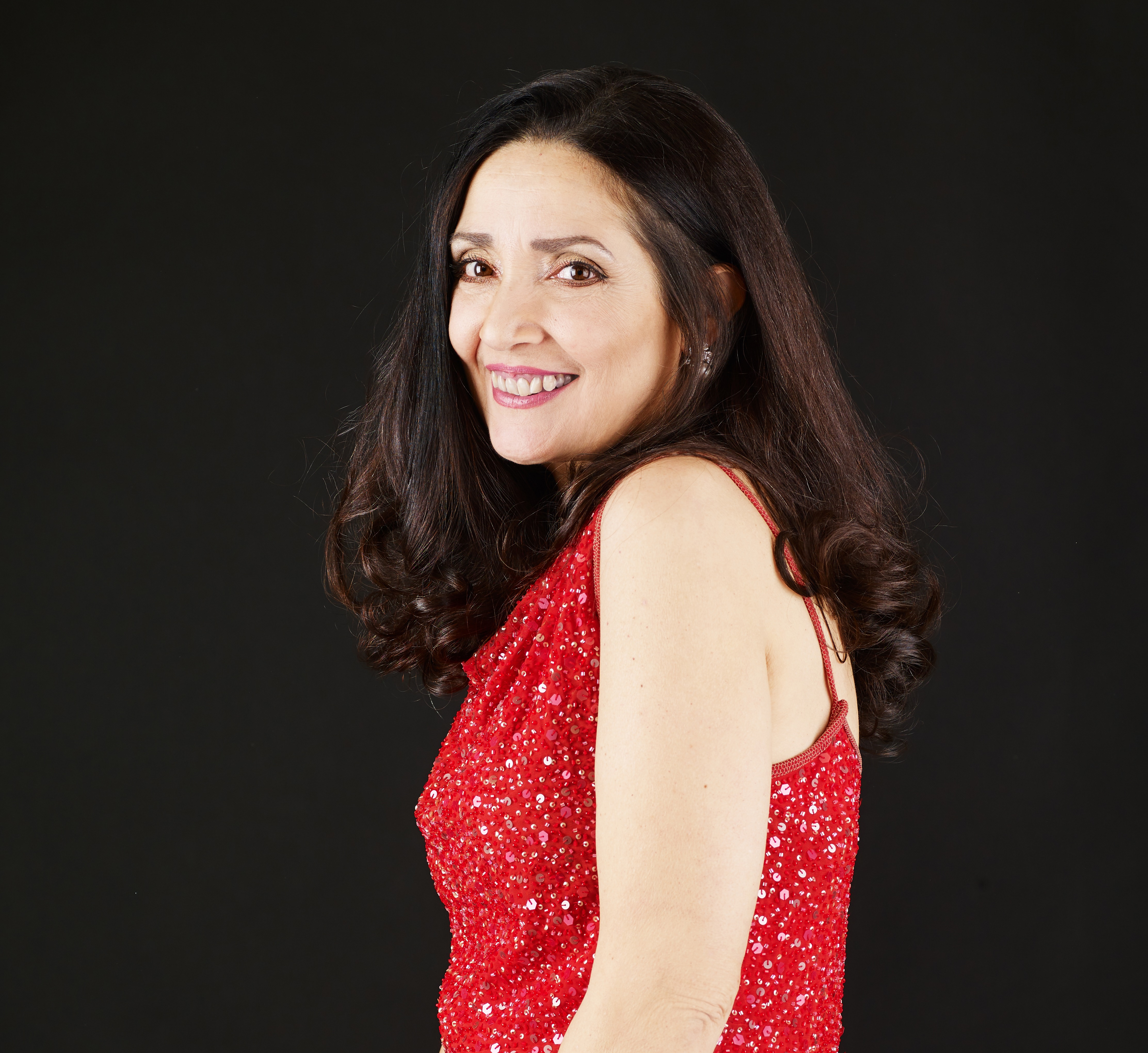
Maria Gabriella Mariani is an Italian pianist, composer and writer who studied first in Italy and then in France. Alongside her concert career, she has devoted herself to composition since 2008. Her first CD, Presenze (2008), contains seven solo piano works inspired by her first novel of the same name. That year she also composed Fun Tango: Three Radiant Flows of a Single Matrix, a piano work in three movements for which she received three Global Music Awards in 2017, as both composer and performer. Her novel Imperfect Consonances is linked to Fun Tango; both were published in 2010.
In 2009 she composed Il cielo s’inabissa (The Sky Sinks) and Traces, a piano sonata in three movements. In 2014 she recorded Riflessi (Reflections), solo piano pieces connected to her collection of stories of the same name, centred on an imaginary wheel of time.
In 2011 she dedicated the sonata Pour jouer to her teacher Aldo Ciccolini and performed it in his presence in 2014 at the official event “Tribute to Aldo Ciccolini.” After the performance, he said publicly: “I recognised myself very often during the performance of this piece—a masterly performance that also reveals a truly exceptional personality, that of Mariani, with extraordinary pianistic resources. I express my emotion, all my feeling, on hearing this monumental work dedicated to me.”
In 2013 she composed Solo and In the Name of the Father and the Son. The latter, for two voices, piano and chamber orchestra, is connected to a theatrical libretto of the same name, also written by Mariani as a novel. Further compositions include Ologramma: Theme, 17 Variations and Finale with Improvisation (2014) and Kinderliana (2017), a collection of pieces connected to her Fairy Tales of Doracia.
She has performed her compositions at major Italian theatres, conservatories, festivals and concert associations. Her music has been broadcast by RAI TRE, RSI in Lugano and Radio Classica’s “Il Pianista,” and has received appreciative assessments and reviews in leading music magazines. Some of her scores are published by Da Vinci Publishing in Osaka.
Maurice Ravel (b Ciboure, Basses-Pyrénées, 7 March 1875; d Paris, 28 Dec 1937). French composer. He was one of the most original and sophisticated musicians of the early 20th century. His instrumental writing – whether for solo piano, for ensemble or for orchestra – explored new possibilities, which he developed at the same time as (or even before) his great contemporary Debussy, and his fascination with the past and with the exotic resulted in music of a distinctively French sensibility and refinement.
Myth and Memory, intertwined like the two faces of a coin, at times are indistinguishable and at other times alternate in their appearance. This journey through epochs marks the progression from an era brimming with noble aspirations to one tinged with deterioration. At this passage’s extremes, the Waltzes of Brahms and Ravel emerge, with the epicenter being the intimate universe of my memories, encompassing my origins (Symphonic Pieces) and my lineage (Nené Waltz). Dance, especially the waltz, is a dominant theme here, symbolizing both the twilight of the 19th century…
Myth and Memory, intertwined like the two faces of a coin, at times are indistinguishable and at other times alternate in their appearance. This journey through epochs marks the progression from an era brimming with noble aspirations to one tinged with deterioration. At this passage’s extremes, the Waltzes of Brahms and Ravel emerge, with the epicenter being the intimate universe of my memories, encompassing my origins (Symphonic Pieces) and my lineage (Nené Waltz). Dance, especially the waltz, is a dominant theme here, symbolizing both the twilight of the 19th century and the closure of an entire period.
The waltzes of both Brahms and Ravel reinterpret the traditional waltz form. Brahms’ versions embody a folk spirit, eschewing opulence and salon sophistication, painting an emotional spectrum from gentle to grim, with occasional folk-inspired hues. Ravel’s renditions, on the other hand, are imbued with a melancholic air, not just signaling the end of an age but also serving as an omen of mortality, with their rhythm breaking and elevating into something ethereal.
The descriptors “nobles” and “sentimentales” blur in meaning as they confront the dawn of the new century.
Between the waltzes of Brahms and Ravel sit my own compositions: the Symphonic Pieces from 2022 and the Nené Waltz from 2021. They represent dual approaches to memory: the first as a collective narrative that connects historical events to the realm of myth, and the second as a personal remembrance tracing back to my own origins. Within my past, I discover the sea and the mountains-two distinct yet harmoniously interwoven landscapes that reflect in my music. While my previous album “Visions” included pieces from the Mediterranea collection, this current work is devoted to the mountain nymphs, valleys, and woods. Choosing the title “Symphonic Pieces” was not without its challenges; I pondered a descriptive name but ultimately settled on one that evokes an abstract impression. The places of memory and origin morph into a Parnassus, home to nymphs and bestowed with mythical resonance, untouched by rustic simplicity, and radiating an epic aura. The influence of Schumann’s Op. 13 and Op. 16 resonates deeply with me. This composition, like those preceding it, maintains a tonal and cyclical architecture, with cyclicity knitting together each movement and culminating in the third movement, which synthesizes the themes introduced earlier.
Distinct from many of my musical composition that are connected to my literature works, this composition stands on its own. In its conception, I contemplated a narrative infused with the presence of the Aloniades, nymphs of the cliffs, Dryads of the woods, and Oreads of the mountains. Yet, given its comprehensive musical and symphonic nature, I chose to let it transcend specific tales, allowing it to be an autonomous expression of my ancestral lands-pristine and mythical, where human settlement poses a challenge. Its symphonic character is underscored, perhaps because it was initially envisioned as a piano concerto, yet it found its true voice within the intimate scope of the piano. The bold passages that sporadically surface throughout the piece reveal a polyphonic texture, notably in choral-like moments within the first and final movements. A footnote: a Molise folk tune subtly enters towards the work’s conclusion, envisioning a celebration inhabited not by mortals but by ephemeral, mythical entities.
The genesis of the Waltz dedicated to Nené complements that of the Symphonic Pieces. While the latter amplifies the collective and monumental, “Nené Waltz“ inclines towards the private and heartfelt. Had it not been for the shadow of death and sorrow that colors Nené’s narrative, her waltz might have resembled Schumann’s Op. 15 in spirit. As such, her waltz occasionally assumes a somber and unsettling tone.
Reflecting on my body of work, both literary and musical, a recurrent motif emerges: the entanglement of death and dance. This leitmotif is present in pieces like “Chef Tango,” selections from the “Kinderliana” collection, such as “The Animated Doll” and “The Dancer’s Waltz,” and the finale of “Pour Jouer” featuring a skeletal dance. This motif acts as a bridge connecting me to my characters – Mario Chef, Alin, Aldo Ciccolini – some of whom have not only existed within the realms of my creations but have also played significant roles in my life, my past, and my heritage. In this context, dance embodies both a means of connection and a gesture of farewell.
Nenè, born Antonietta Colantuono, emerged from a small village in Molise. Her father, my great-grandfather Domenico, once a celebrated tenor known as “Manrico” in Verdi’s “Il Trovatore,” later chose a life as a notary, a decision shrouded in regret and secrecy. Nené, his youngest daughter, was poised for a singing career at Rome’s Santa Cecilia Conservatory, a dream her father had envisioned for her. Yet, her life was cut short by typhus at the age of twelve. In her final moments, her world was one of swallows and doves, and her longing for her schoolbook, “The Tales of Things.” Soon after, Domenico followed her in death, burdened with life’s regrets and undisclosed secrets.
I hold only a few keepsakes of Nené: notebooks, photographs, and trinkets. A century later, I traverse the land of my ancestors, now silent and haunting, yet echoing with the whispers of bygone times, fostering a surreal and intense dialogue that crescendos into a tumultuous waltz, one that I envisage sharing with her.
I may never revisit these distant, once-familiar places, but the memories they hold are an indelible part of me. They inspire my story “The Swallows Always Return in Spring,” winner of the 2022 Dantebus selection, and this waltz, composed with a bold conclusion in 2021.
Through my compositions, I aim to encapsulate the essence of existence within my life, accompanying me even as the world around me seems to wither and decay. While my music is not aligned with a symphonic poem tied to a narrative, it possesses its own distinctive compositional structure and embarks on a journey independent of any accompanying text. Yet, the backdrop of events and my pursuit of a tonal, often contrapuntal structure lend a narrative quality to my music, drawing from atmospheres, visions, and scenes that intertwine life and death.
Il Mito e la Memoria sono due facce della stessa medaglia: talvolta si identificano, altre volte si alternano. Questo viaggio nel tempo segna il passaggio dal secolo dei grandi ideali a quello del decadimento. Alle estremità di questo percorso ci sono i Valzer di Brahms e quelli di Ravel, al centro c’è il microcosmo della mia memoria che riguarda le mie radici (Pezzi Sinfonici) e la mia famiglia (Nené Waltz). Motivo conduttore è la danza, soprattutto il valzer, che maggiormente contrassegna la fine del XIX secolo e, in generale, di un’epoca.
Sia i valzer di Brahms, sia quelli di Ravel sono una rivisitazione del valzer per antonomasia: con Brahms si colorano di un sapore popolareggiante e non hanno più niente di sfavillante o di salottiero. Descrivono l’ambientazione cara all’autore, con tinte a tratti tenere, a tratti fosche, a tratti folkloristiche. Con Ravel acquistano una connotazione malinconica: non è solo la fine di un secolo, ma è il presagio di morte a caratterizzare i suoi valzer, in cui finanche l’andamento ritmico risulta smembrato, sublimato. E in tal senso vanno intesi anche i due aggettivi “nobles” e “sentimentales”, che, al cospetto del nuovo secolo, sembrano non aver più alcun significato.
In mezzo a loro si collocano i miei Pezzi Sinfonici, scritti nel 2022, e Nené Waltz, del 2021. Queste composizioni rappresentano due modi di intendere la memoria: come una sorta di narrazione corale che parte dalla storia per evocare il mito, e come un ricordo personale che dalla mia storia risale alle mie origini. Nel mio passato c’è il mare e ci sono i monti. Due paesaggi differenti e complementari, che confluiscono nei miei ricordi e che si riflettono nelle mie opere. Nel mio precedente CD “Visions” c’erano i tre brani della raccolta Mediterranea, in questo CD ci sono altri tre brani dedicati alle ninfe dei monti, delle valli e dei boschi. La scelta del titolo, Pezzi Sinfonici, non è stata facile: sul principio pensavo a qualcosa di descrittivo, ma poi ho preferito un titolo più astratto. I luoghi della memoria e delle mie origini diventano una sorta di Parnaso che ospita delle ninfe e acquista una valenza mitica. Non risentono di eventuali connotazioni rustiche, semmai acquistano un carattere epico. Altri spunti sono l’Op. 13 e l’Op. 16 di Schumann a cui sono legata da un rapporto direi ancestrale. Come le mie precedenti composizioni anche questa ha una struttura tonale e ciclica. La ciclicità riguarda ciascun movimento e tutti e tre insieme. Pertanto il terzo movimento diventa anche la sintesi di tutti i temi che sono compresi nei movimenti precedenti.
Questa è una delle poche composizioni musicali che non è abbinata a racconti o romanzi. Durante la stesura pensavo che prima o poi avrei scritto qualche storia che si rifacesse alle Aloniadi, ninfe dei dirupi, alle Driadi, dei boschi e alle Oreadi, dei monti. Ma poi, pensando al brano in tutta la sua completezza e al fatto che ogni descrizione o narrazione avrebbe potuto falsare il suo carattere esclusivamente musicale e sinfonico, ho preferito non legarlo a vicende definite, lasciandolo proprio come di fatto è: la mia rappresentazione dei luoghi delle mie origini. Luoghi aurorali e perduti, intatti e mitici, dove l’uomo fa fatica a vivere. La connotazione sinfonica è invece assai evidente, forse perché inizialmente questa composizione doveva essere un concerto per pianoforte e orchestra, ma poi ho preferito “risolvere” il tutto nell’ambito del mio strumento d’elezione… Il sinfonismo risiede anche nei passaggi spesso rocamboleschi, non voluti, ma di fatto inevitabili, proprio nel tentativo di dare al brano una struttura polifonica; e quest’ultima è presente tutte le volte che emerge l’elemento della coralità, soprattutto nel primo e nell’ultimo movimento. Piccola annotazione: alla fine ho riproposto, in modo molto vago, un canto molisano, immaginando una sagra festante i cui personaggi però non sono di questo mondo, ma presenze mitiche e fugaci.
La genesi del Valzer dedicato a Nené è invece complementare rispetto a quella dei Pezzi sinfonici: lì domina l’elemento corale ed epico, qui quello più personale e intimistico. E sicuramente Nené Waltz sarebbe stato un brano di quelli alla maniera dell’Opera 15 di Schumann se la storia di Nené non si fosse tinta di morte e di dolore. Pertanto il suo valzer è a tratti mesto, a tratti macabro. Ripensando alle mie composizioni, sia a quelle narrative, sia a quelle musicali, noto che spesso faccio ricorso al binomio morte-danza; si ritrova in Chef Tango, in alcuni brani della raccolta Kinderliana (La bambola animata, Il valzer della ballerina, in parte in Alin), finanche nella finale di Pour Jouer (la danza degli scheletri). Evidentemente rappresenta una sorta di collante tra me e i miei personaggi (Mario Chef, Alin, Aldo Ciccolini), molti dei quali realmente vissuti, che hanno fatto parte della mia vita, del mio passato o semplicemente delle mie radici e che continuano a vivere con me in un’altra dimensione. Sicché la danza diventa sinonimo di legame e di commiato.
Nenè, al secolo Antonietta Colantuono, era una ragazza nata e vissuta in un piccolo paese del Molise. Il padre, il mio bisnonno, Domenico, era stato tenore, appena ventenne, negli anni ’80 dell’800; riscosse grandi successi nelle vesti di “Manrico” (il protagonista de “Il Trovatore” di Giuseppe Verdi) al Teatro San Carlo di Napoli e al Tetro alla Scala di Milano. Fece poi rientro al suo paese per fare il notaio, con tanta nostalgia e qualche segreto scottante. Nené era la sua ultima figlia, aveva una bella voce e tanta voglia di partire per andare a studiare canto a Roma al Conservatorio di Santa Cecilia dove Domenico l’aveva già iscritta.
Morì nel 1923 di tifo a soli dodici anni, nei suoi ultimi istanti vedeva le rondini e le colombe e chiedeva incessantemente del suo libro di scuola “I racconti delle cose”. Poco dopo la seguì il padre, con i suoi rimpianti e i numerosi segreti della sua vita dolorosa.
Di lei ho molto poco: i quaderni, qualche foto, qualche oggetto.
A distanza di un secolo ritorno nel paese dei miei antenati: i luoghi in cui Nené è vissuta oggi sono deserti, silenti, spettrali. Ma vi ritrovo tracce del passato che prendono vita attraverso un dialogo intenso e surreale che culmina in un valzer tumultuoso che immagino di ballare con lei.
Non credo che farò più ritorno in quei luoghi ormai lontani, estranei, ma mi restano questi ricordi, che hanno ispirato il mio racconto “Le rondini tornano sempre in primavera” (vincitore Selezione Dantebus 2022) e questo valzer dal finale rocambolesco, composto nel 2021. E questo è il senso che io voglio dare alle mie opere: una sorta di vita nella mia vita che mi accompagna anche quando tutto intorno sa di tramonto e disfacimento. L’abbinamento alla novella non ne fa un poema sinfonico, dal momento che il brano ha una sua specifica struttura compositiva e viaggia autonomamente rispetto al testo narrativo. Tuttavia, i fatti che fanno da sfondo all’opera e la stessa ricerca di una struttura tonale, e spesso contrappuntistica, ribadiscono la caratteristica valenza “narrativa” delle mie musiche che si ispirano ad atmosfere, visioni e scene di vita e di morte.
Maria Gabriella Mariani © 2023
Selected awards, reviews and interviews. Radio broadcasts and podcasts are listed separately below.
MusicVoice
Artistic assessment: 4.5/5; technical assessment: 4/5. Read Andrea Bedetti’s review of the recording.
Read the review ↗ - MusicVoiceMusicWeb International
A positive assessment of Mariani’s compositions, orchestral piano textures and lively performances.
Read the review ↗ - MusicWeb InternationalLe Salon Musical
An enthusiastic review of Mariani’s virtuosity, interpretative depth and the dialogue between her own music, Brahms and Ravel.
Read the review ↗ - Le Salon MusicalOperaTeatro
A positive review of Mariani’s personal, lucid and finely detailed journey through Brahms, Ravel and her own music.
Read the review ↗ - OperaTeatroCIDIM
Maria Gabriella Mariani discusses Mythos and Memories and her work as pianist and composer.
Read the interview ↗ - CIDIMCIDIM
A new-release presentation of Maria Gabriella Mariani’s Mythos and Memories. This is an editorial album listing, rather than an independently rated review.
Explore the coverage ↗ - CIDIMKlassiek Centraal
An editorial presentation documented by the artist’s promotional archive.
Read the reference ↗ - Klassiek CentraalBresciaoggi
The artist’s promotional archive confirms publication of a review. Its date and complete clipping have not been recovered.
Corrierebit
The promotional archive records publication on 27 May 2024. The individual archived article and complete assessment have not been recovered.
Read the review ↗ - CorrierebitBroadcasts, conversations and listening features dedicated to this recording.
Rai Radio 3 · Primo Movimento
Radio 24 · Musica Maestro
Maria Gabriella Mariani presented Mythos and Memories in an interview recorded on 24 June and broadcast on 4 August, as documented in the project worksheet.
Explore the broadcast ↗ - Radio 24 · Musica MaestroRadio Vaticana · Concerto festivo
An interview with Maria Gabriella Mariani about the recording, documented in the project worksheet. No public replay is linked.
Explore the broadcast ↗ - Radio Vaticana · Concerto festivoVenice Classic Radio
Tracks from this recording are documented in the station’s live programming on 8 July 2024. No individual replay is available.
Explore the broadcast ↗ - Venice Classic Radio


