


MusicVoice
Artistic assessment: 5/5; technical assessment: 4/5. Read Andrea Bedetti’s review of the recording.
Read the review ↗ - MusicVoice


Da Vinci Classics
Physical and Digital Release: 19 April 2019
Maria Gabriella Mariani brings Schumann, Debussy and her own music together in Fairy Tales, exploring the piano's capacity for musical storytelling and imaginative transformation.
13.67€
Digital programme · 30 tracks
Track timings refer to the digital edition.
“I have two languages and many languages.” This is how Maria Gabriella Mariani defines herself. Music, which has always been part of her life, and narrative writing, which she has pursued for several years, are two sides of the same coin.
Martha Argerich has praised her musical nature: “An extremely interesting talent; sure, imaginative, very artistic, her way of playing is so varied, it is never predictable […], I love her Scarbo […] Her improvisations are extraordinary.” Mariani has explored improvisation since childhood.
Her pianistic roots lie in Vincenzo Vitale’s Neapolitan school, although she soon distanced herself less from Vitale’s teaching than from the concept of a school in general. She studied with Aldo Ciccolini in Italy and Paris and graduated with an “Excellent” assessment from the Lorenzo Perosi International Academy in Biella. She also studied chamber music with the Trio di Trieste, while preferring solo performance.
At the age of fourteen, she made her debut at Rimini’s Aterforum, receiving substantial attention from leading Italian critics. A few years later, winning the Liszt piano competition in Lucca brought her a scholarship to study in Paris; she subsequently received a prize from the Senate of the Italian Republic. She won first prizes in numerous national and international competitions.
Her compositions and recordings, presented throughout Italy, have attracted the attention of A. Barizza, N. Cattò, L. Ciammarughi, G. P. Minardi, L. Segalla, S. Valanzuolo, L. Valente and A. Zignani, among others. In 2014, the Neapolitan musicologist, composer and conductor Roberto De Simone devoted an essay to her work and to possible approaches to composition today, observing that “the music of Maria Gabriella Mariani could declare the possibility of today’s creativity.” As a soloist, she has performed for prestigious concert associations and theatres in Italy and abroad.
A graduate in literature, she wrote a thesis entitled Schumann. Thought and Fantasy and has published scholarly writings on music, literature and the arts in collaboration with several Italian universities. At the time of the original biography, she had received four Global Music Awards in the United States, recognising her work as a composer and as an interpreter of French music—including Ravel’s Gaspard de la nuit—and her own piano compositions. Her work has received public and critical acclaim.
After hearing some of her music, Ciccolini said: “Her music reveals a very impressive creative sense, supported by exceptional pianistic skills and a complete mastery of the keyboard, together with a search for tonal colour that is more unique than rare.”
Claude Debussy: (b St Germain-en-Laye, 22 Aug 1862; d Paris, 25 March 1918). French composer. One of the most important musicians of his time, his harmonic innovations had a profound influence on generations of composers. He made a decisive move away from Wagnerism in his only complete opera Pelléas et Mélisande, and in his works for piano and for orchestra he created new genres and revealed a range of timbre and colour which indicated a highly original musical aesthetic.
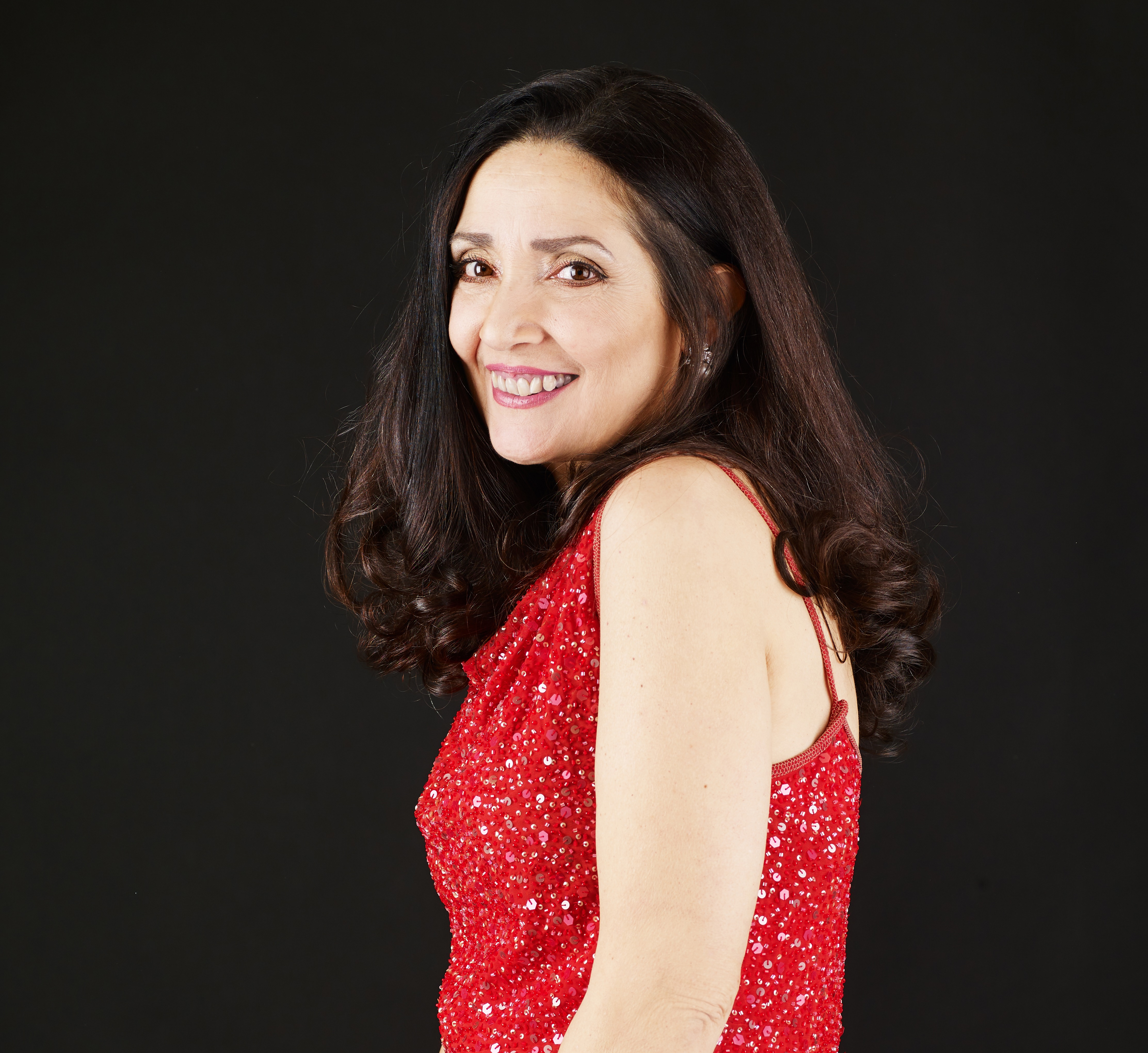
Maria Gabriella Mariani is an Italian pianist, composer and writer who studied first in Italy and then in France. Alongside her concert career, she has devoted herself to composition since 2008. Her first CD, Presenze (2008), contains seven solo piano works inspired by her first novel of the same name. That year she also composed Fun Tango: Three Radiant Flows of a Single Matrix, a piano work in three movements for which she received three Global Music Awards in 2017, as both composer and performer. Her novel Imperfect Consonances is linked to Fun Tango; both were published in 2010.
In 2009 she composed Il cielo s’inabissa (The Sky Sinks) and Traces, a piano sonata in three movements. In 2014 she recorded Riflessi (Reflections), solo piano pieces connected to her collection of stories of the same name, centred on an imaginary wheel of time.
In 2011 she dedicated the sonata Pour jouer to her teacher Aldo Ciccolini and performed it in his presence in 2014 at the official event “Tribute to Aldo Ciccolini.” After the performance, he said publicly: “I recognised myself very often during the performance of this piece—a masterly performance that also reveals a truly exceptional personality, that of Mariani, with extraordinary pianistic resources. I express my emotion, all my feeling, on hearing this monumental work dedicated to me.”
In 2013 she composed Solo and In the Name of the Father and the Son. The latter, for two voices, piano and chamber orchestra, is connected to a theatrical libretto of the same name, also written by Mariani as a novel. Further compositions include Ologramma: Theme, 17 Variations and Finale with Improvisation (2014) and Kinderliana (2017), a collection of pieces connected to her Fairy Tales of Doracia.
She has performed her compositions at major Italian theatres, conservatories, festivals and concert associations. Her music has been broadcast by RAI TRE, RSI in Lugano and Radio Classica’s “Il Pianista,” and has received appreciative assessments and reviews in leading music magazines. Some of her scores are published by Da Vinci Publishing in Osaka.
Robert Schumann: (b Zwickau, Saxony, 8 June 1810; d Endenich, nr Bonn, 29 July 1856). German composer and music critic. While best remembered for his piano music and songs, and some of his symphonic and chamber works, Schumann made significant contributions to all the musical genres of his day and cultivated a number of new ones as well. His dual interest in music and literature led him to develop a historically informed music criticism and a compositional style deeply indebted to literary models. A leading exponent of musical Romanticism, he had a powerful impact on succeeding generations of European composers.
When I described this project to my publisher, he immediately proposed the title Fairy Tales. I accepted willingly, although I’m not particularly fond of titles in foreign languages, especially since ten years ago, when I presented my first work, Presences, some criticized the choice of English titles. Stories, fairy tales, “fantasy pieces” – as Schumann would have put it- are in fact the red thread of this Album, in which the compositions were chosen not merely for their use of similar extra-musical subjects, but instead due to their poetic consistency.…
When I described this project to my publisher, he immediately proposed the title Fairy Tales. I accepted willingly, although I’m not particularly fond of titles in foreign languages, especially since ten years ago, when I presented my first work, Presences, some criticized the choice of English titles. Stories, fairy tales, “fantasy pieces” – as Schumann would have put it- are in fact the red thread of this Album, in which the compositions were chosen not merely for their use of similar extra-musical subjects, but instead due to their poetic consistency. The world of children is like a shelter, or even a way of living to be attained, at least for me. As possibly Schumann viewed it, this enchanted and fantastic dimension an exclusive domain of children: indeed my intention is to recover it as an adult and bestow it with awareness. If it is true that children really behold the power to be amazed, my path must turn towards the past, in quest of wonder: a wonder seen through lenses which unavoidably differ from those of childhood, different, and, in certain aspects, mythical.
Reading about the ideas and sources of inspiration behind Opus 15, I think I am rather close to the author’s intentions: in Kinderszenen Schumann did not stop at a musical portrait of his family, which, in 1838 he did not yet even have. I dare say that he would not have created such an insight on his domestic life, even if he had already had one. Scene d’Infanzia (Childhood Scenes) are more of an evocation rather than a description, in which the images suggested by the twelve titles become part of a larger romantic fictional world, in which childhood coincides with an auroral age, with an ideal world. The approach adopted by Debussy, who dedicated Children’s Corner to Chouchou, is much more realistic. More realistic because truly lived: most of the pieces refer to real atmospheres, or to objects actually owned by his daughter. The last work in the collection recalls and translates in a highly personal fashion the “Cake-walk”, a dance which was fashionable in Paris in the early 1900s. Since I have been inspired, in the composition of my Kinderliana, by a kaleidoscope of different approaches and references (some of which are more distinctly intimate and human, while others are more ironic), therefore I decided to include this possibly too well-known piano piece in the collection. My own compositional work is, at the same time, both musical and narrative, and the two are inextricably linked and connected. Like Schumann, I too wished to enter a world in which opinion and imagination could coexist; moreover, I composed this work in parallel with a collection of stories with the same titles, except for Introduction, Memento and Conclusion. Thus, behind each piece there is a story; for this reason, rather than scenes, I would say that each composition features a character, protagonists of their own stories: the dancer, the knight, the animated doll, the parrot.
Just like Schumann, I imagined a stage on which the characters (puppets), bring their stories to the public’s attention. Therefore, on the occasion of a mise en scène of Kinderliana that I worked on, my vision became a reality: young actors were the protagonists of the stories and their presence on stage framed the musical performance. Kinderliana opens with fantastic and imaginative stories and is slowly enriched with increasingly tragic and human content. As I realized that the tragic elements were taking over the more playful and ineffable ones, I started to worry. But then I thought: fairy tales, just like the main characters of the stories, Dora and Lucia, grow up; the most heartbreaking and inexplicable truths are often hidden behind most stories. In fact, both the tales and the musical collection are addressed not only to a young audience. Rather, their message can be seen under various lights; it can be understood by adults who have rediscovered a child’s innocent worldview and managed to transform human tragedies in a kind of surreal catharsis. Magic does not come only from the spells of fairies, but rather from the miracle of the human soul, young or old; this I address through Fairy Tales, aiming at moving and inspiring it. These notes are not intended as a technical-stylistic analysis of the compositions I presented above: in my view, neither Schumann’s Opus 15 nor Debussy’s anthology are in need of introductions or commentaries. Moreover, it is not easy for me to write about my compositions. Instead, I thought that I should explain my choice of creating a large story with many characters, both real and invented, from Chouchou to Dora and Lucia, from the attention-seeking child to the one who does not want to sleep, from a knight made of clay to one on a rocking horse, up to the dancer or the little Alin. All have their own individual part of the story to tell on the great stage of life. The audience, comfortably seated on their chairs, are free to experiment empathizing with all characters, perhaps remembering childhood or reflecting on the many evils of life that only fairy tales can sublimate in a wonderfully disturbing way.
Album Notes by Maria Gabriella Mariani
Selected awards, reviews and interviews. Radio broadcasts and podcasts are listed separately below.
MusicVoice
Artistic assessment: 5/5; technical assessment: 4/5. Read Andrea Bedetti’s review of the recording.
Read the review ↗ - MusicVoiceBresciaoggi
A positive presentation of Mariani’s Fairy Tales programme, connecting her Kinderliana with Schumann and Debussy’s musical worlds of childhood. Published in the newspaper’s classical record column.
Kathodik
A positive review praising Mariani’s command, sensitivity and rhythmic articulation, and the recording’s ability to convey the magic and energy of her live performances.
Read the review ↗ - KathodikCritica Classica
An interview with Maria Gabriella Mariani explores Fairy Tales, including the relationship between Schumann's Kinderszenen, Debussy's Children's Corner and her own Kinderliana. It discusses the connections between music, childhood, imagination and narrative.
Read the interview ↗ - Critica ClassicaBroadcasts, conversations and listening features dedicated to this recording.
Rai Radio 3 · Primo Movimento
Selected for the programme’s disc review segment on this date.

Same artist

Same artist

Same artist

Same artist